pattern, place, and the spaces between

A reflection inspired by Exquisite Creatures, an exhibition by Christopher Marley.
Most people walk into an exhibition expecting to look outward. I walked into Exquisite Creatures and found myself paying closer attention to what was shifting internally.
At first glance, Christopher Marley’s work is a celebration of form: insects, minerals, feathers, starfish, sea urchins, arranged with almost architectural precision. But what struck me most was not the material, or even the beauty, but the embedded intelligence inside every composition. Nature, it turns out, is an extraordinary designer long before any of us arrive with our own systems and grids.
As I moved through the exhibit, I found myself tracking patterns the same way I do in my own studio practice.
How does a line break tension? Where does repetition become rhythm? What happens when color relationships are allowed to hum rather than shout?
These questions surface in my paintings, too — not always consciously, but often in the quiet layers beneath the visible ones. Marley’s work reminded me that the instinct to cross disciplines is not a detour. It is a method. It is a way of seeing.
Living Between Worlds
For years I have moved between art and brand strategy, and I used to treat that duality as something to explain — or occasionally even ignore. But standing in that gallery, surrounded by works that borrow equally from biology, design, preservation, and sculpture, I recognized something I’ve felt but rarely named:
The most compelling work often comes from the spaces between worlds.
Marley’s refusal to choose a single identity felt like permission to acknowledge how my own disciplines bleed into one another. The way I think about composition owes something to editorial design. The way I use color has roots in nature studies. My paintings are built from the same instincts that helped me shape stories, experiences, systems.
Pattern as a Form of Knowing
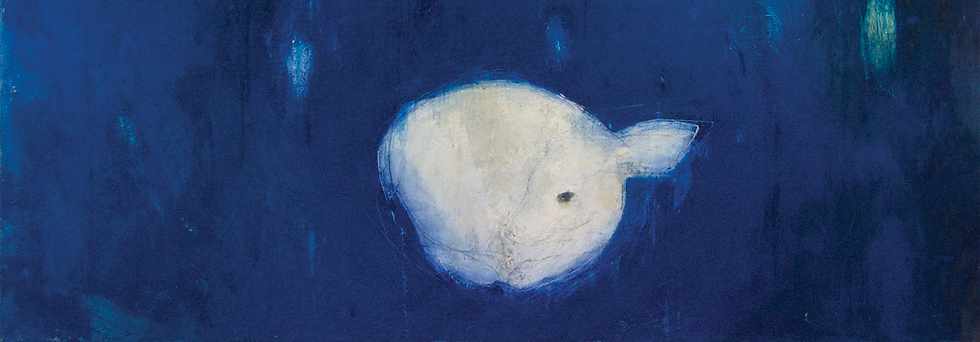
Lately, my work has been shifting — loosening, expanding, becoming more influenced by water, movement, and the sensation of looking through instead of at. Even in this shift, the idea of pattern continues to anchor me. Not decorative pattern, but the deeper structures that guide how a piece breathes: thresholds, echoes, tensions, edges that hold or release.
Seeing Marley’s work in person reminded me that pattern isn’t a constraint. It’s a form of knowing.
A way of grounding the intuitive.
A way of staying connected to something larger than the canvas.
What I Brought Back to the Studio
I didn’t leave the exhibition wanting to work with insects or minerals. I left with something subtler:
• A renewed trust in cross-disciplinary thinking.
• A reminder that precision and intuition can coexist.
• A curiosity about what’s emerging in my new water-based studies.
• And a small, private permission slip to keep following what feels resonant rather than what feels expected.
.


Comments